HMS Bridlington
The Naming of HMS Bridlington

In 1939, the town of Bridlington received the exciting news that a naval vessel would be named in its honor. This announcement, made in the Bridlington Chronicle on July 28th, revealed that HMS Bridlington would be part of Britain’s 1939 naval construction program as a Bangor-class minesweeper. The name was confirmed by the Bridlington Free Press on November 2nd, 1940, where it was shared that the Town Council had been informed of the ship’s official designation.
Bridlington’s Warship Week and Adoption
October 1941 marked a significant chapter in HMS Bridlington’s history with the town’s Warship Week. Initially, the goal was to adopt HMS Kittiwake by raising £100,000, but the town exceeded expectations, raising £293,762—an impressive £12 per head of population. This success allowed the town to adopt HMS Bridlington instead. The Admiralty responded by providing plaques from the ship, which were presented to the town’s Corporation as a symbol of this special bond.
The Vital Role of HMS Bridlington in WWII
As a Bangor-class minesweeper, HMS Bridlington played a crucial role during World War II. Described by the Bridlington Chronicle as a “super minesweeper,” the ship was vital in clearing mines from British waters, ensuring safe passage for the mercantile marine. Her service was instrumental in protecting supply routes, a key objective in the war effort. Although not a traditional fighting ship, HMS Bridlington’s contributions were critical in winning the war.
Wartime Support and Community Ties
The connection between HMS Bridlington and its namesake town was further strengthened through community support. In February 1941, the ship’s crew received parcels of woollens from the local WRVS, a gesture of solidarity and care during trying times. Despite being unable to visit Bridlington Bay, the ship’s captain expressed deep gratitude for the town’s unwavering support. The relationship between the town and the ship continued to flourish throughout the war, with regular exchanges of gifts and letters of thanks from the crew.
Transition to HMAFV Bridlington and Post-War Service
In 1946, HMS Bridlington was transferred to the Royal Air Force and renamed His Majesty’s Air Force Vessel (HMAFV) Bridlington. This marked a new chapter in the ship’s life as it was manned by RAF personnel and adapted for new duties. The vessel’s first major task under RAF command was to assist in creating a landing strip on Gan Island in the Indian Ocean, a project that involved regular voyages between the island and Colombo, a grueling 415-mile journey.
Legacy and Final Years
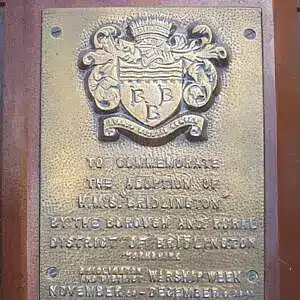
After completing her service, HMAFV Bridlington returned to the UK and was eventually decommissioned. On April 28th, 1958, the ship’s bell and name plaque were handed back to the town of Bridlington, a final gesture marking the end of the ship’s active duty. Although HMAFV Bridlington was scrapped in May 1958, her legacy lives on through the artifacts preserved by the town, including the ship’s bell, nameplates, and plaques. These items are now displayed at the Bridlington Harbour Heritage Museum, ensuring that the memory of this remarkable vessel remains alive for future generations.
HMS Bridlington was not just a minesweeper; she was a symbol of unity between a ship and its namesake town. From her vital role in World War II to her post-war service with the RAF, the vessel’s history is a testament to the resilience and strength of both the ship and the people of Bridlington. The story of HMS Bridlington is one of dedication, service, and enduring community ties that continue to be celebrated today.